

Current Issues
What You Need to Know
Legal fight to prevent environmental destruction NJ Conservation joins motion in support of lawsuit to stop the U.S. Department of Homeland Security's plans for an ICE detention facility that threaten the natural resources of the Highlands Region.
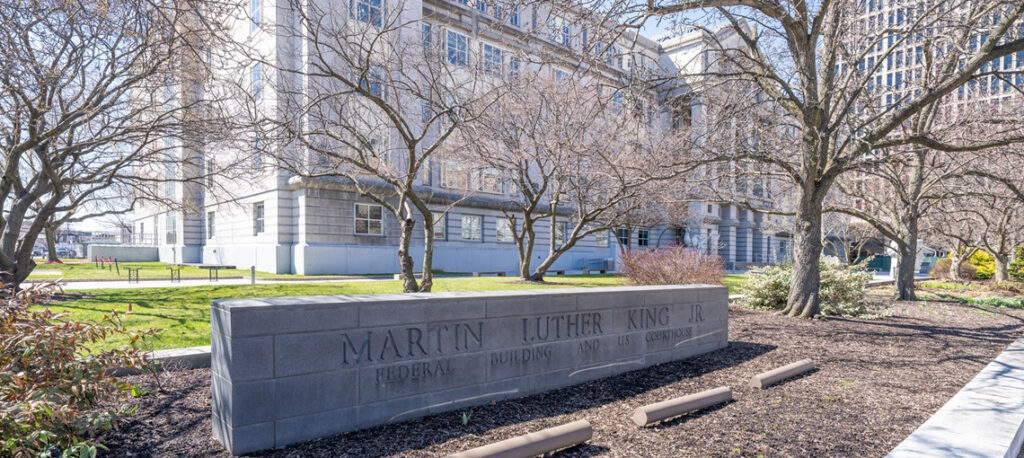
Martin Luther King Jr. Federal Building & U.S. Courthouse by Ajay Suresh
Growing Partnerships in Sustainable Agriculture NJ Conservation advances its goal of supporting sustainable, climate-friendly agriculture while increasing equitable access to preserved lands
In 2023, we formed a partnership with our friends at the Foodshed Alliance to expand their Sustainable Agriculture Enterprise (SAgE) program to Sergeantsville, Hunterdon County. The SAgE program aims to make land more accessible to growers by providing low-cost, long-term land leases to farmers pursuing earth-friendly farming. Through this partnership, NJ Conservation is advancing its goal of supporting sustainable, climate-friendly agriculture while increasing equitable access to preserved lands.
Akirah and Mancoba Hlatshwako, the founders of the nonprofit farm Ubuntu Permaculture Mission Inc., became the first farmers to sublet part of a 19-acre preserved farm owned by NJ Conservation. The Hlatshwakos plan to grow “everything” on the six acres they’re leasing, including vegetables, fruits, and nuts. They have been using the Sergeantsville site to educate members of the wider farming community on incorporating sustainable farming principles like native tree planting, lowering waste, and composting through demonstrations at the farm.

Ubuntu Permaculture Mission Inc. and the Foodshed Alliance recently welcomed Princeton University students to SAgE Sergeantsville to learn about sustainable farming methods.
Transforming Communities One Tree at a Time Trees for Trenton Initiative Will Bring 1,000 Shade Trees to the Capital City
A thriving tree canopy is a critical part of a healthy community. Not only do trees provide shade for homes and businesses, they also filter out pollutants and protect people from excessive heat, among other benefits. While the value of trees to communities may be less obvious than those of reliable bus lines, good street lighting, or well-maintained roads, they are vital to maintaining a healthy, vibrant neighborhood.
Historically, there’s been an absence of adequate investment in green spaces in our urban communities. Urban residents have long been subjected to the negative impacts that accompany a lack of trees and green spaces, more so than those in suburban areas. Neighborhoods without trees experience the “heat island” effect, a phenomenon where a community has higher temperatures than surrounding suburban and rural areas because of limited shade and reflective paved surfaces. A well planned and cared for urban tree canopy is critical for combating high temperatures and working towards a community’s environmental resilience and eco-justice.
New Jersey Conservation Foundation and our partners — City of Trenton, Isles, the New Jersey Tree Foundation, the Watershed Institute, and the Outdoor Equity Alliance — are working to build a greener, more equitable New Jersey through the Trees for Trenton program. Thanks to a grant from the New Jersey Department of Environmental Protection, 1,000 shade trees will be planted throughout Trenton over the next three to five years, creating a healthier environment for residents and visitors.

Trees for Trenton was announced in 2023 at an Arbor Day celebration when the first trees were planted at Mulberry Street Park. More trees were planted in fall 2024 along the streets of Trenton and in its parks.
Through 2050, the trees planted during this project will:
- sequester nearly 3 million pounds of carbon dioxide
- intercept more than 14 million gallons of rainwater, reducing stormwater runoff by 2 million gallons
- promote tree equity and benefit 14 overburdened Trenton neighborhoods
- restore the treescapes of historic Cadwalader Park and Mill Hill Park
- aid in the restoration of historic districts including the D&R Canal, Berkley Square, State House, Mill Hill, and Ewing-Carroll Historic District to their original grandeur.
Planting the right tree, in the right place, in the right way will lead to beautiful streets in our community.
Benefits of Urban Forestry
By expanding the tree canopy in Trenton and beyond, our communities will reap a multitude of benefits.
New Jersey is the third fastest warming state in the country, according to the nonprofit Climate Central, and temperatures have increased by about 3.5 degrees since 1970. Trees increase shade, thereby reducing high temperatures for residents. Shading homes and businesses also reduces the use of air conditioners and associated energy costs. Trees can also mitigate air pollutants, naturally filtering out harmful particles while releasing oxygen. They can also decrease runoff and lessen flooding by intercepting and absorbing rain.
Get Involved
Newly planted trees take around two years to become established. During this time, care is essential to the survival of the trees. Participation by city residents, including their help watering the trees and ensuring they are protected from damage, will be critical to growing healthy trees. We must all work together to reap the benefits of these plantings for generations to come.
Public programs will also be offered as part of the project to increase awareness of the overall importance and value of trees in urban communities, as well as associated health benefits and improved quality of life.
To learn more about opportunities, or to request a tree for your neighborhood, email info@njconservation.org.
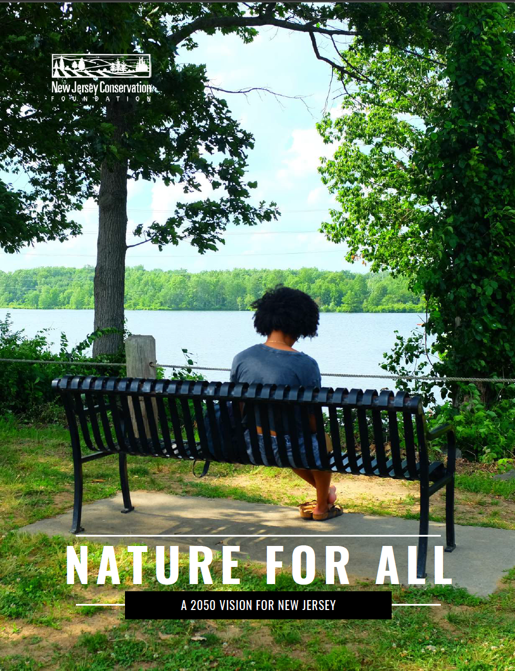
Nature For All A 2050 Vision for NJ
Nature for All: A 2050 Vision for New Jersey sets forth a fresh vision for land conservation over the next few decades with two important recommendations. First, New Jersey must preserve 50% of the most critical remaining lands by 2050, focusing on ecological, water, and agricultural values. Second, the state must establish a comprehensive Green and Healthy Cities Initiative aimed at greening the state’s under-resourced communities and rectifying decades of environmental injustice. New Jersey must continue to lead the nation in land preservation, environmental protection and sustainability, and environmental justice to ensure a better future for all residents. The time for action is now!
Protecting our Public Lands Comprehensive Public Land Stewardship
Long-range Planning for Public Forests
New Jersey needs a comprehensive regional vision and plan for its public forestlands to identify and designate ecologically sensitive areas and mature forests as natural areas and ensure that forest stewardship and management activities would avoid Natural Heritage Priority Sites. Such a plan will also ensure the conservation of rare forest interior species, the protection of scenic viewsheds, historic and archaeological resources, and the highly-valued passive recreational opportunities expected by the public on Green Acres-funded public lands.
Rare Plants
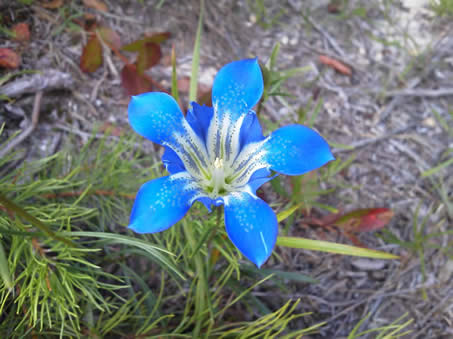
One-third of the plant species native to New Jersey are now considered rare, most are declining, and the public resources devoted to the conservation and management of the natural communities that support these species have been steadily shrinking. The NJDEP Office of Natural Lands Management and the Natural Heritage Program need funding in order to protect these public trust resources.
Program goals:
- Determine and prioritize key public land areas (those generally lacking in pre-existing data), which require rare plant surveys.
- Develop collaborations with non-profit community and funding sources such as Natural Resource Damages funds to conduct rare plant surveys.
- Determine boundaries of new and/or expansion of Natural Heritage Priority Sites and State Natural Areas.
- Ensure that forest management, including logging, is only used as part of comprehensive planning which would ensure the protection of rare plant and animal habitats and other sensitive ecological features.
Additional Important Stewardship Needs
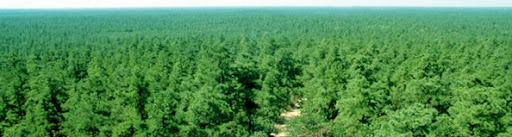 Restore habitat at the 12-year-old, 65-acre outstanding wetlands violation at Whitesbog, within Brendan Byrne State Forest.
- In combination with NJ Department of Agriculture Phillip Alampi Beneficial Insect Laboratory and NJDEP Natural Resource Damages funds, investigate means of attaining biological control for our state’s three most disastrous invasive plant species: urban floodplain (Japanese Knotweed), coastal wetlands (Phragmites) and forests (Japanese Stiltgrass).
Pine Barrens Forest Protection Addressing ORV damage in Wharton State Forest
In 2017, the DEP pulled back from its plan to curb harmful off-road vehicle traffic in Wharton State Forest. However, we worked with the Pinelands Preservation Alliance and succeeded in urging the Pinelands Commission to adopt a motorized access map for all of Wharton. We are advocating that the DEP, under the Murphy Administration, enforce this new regulation and expand the designation of appropriate motorized access routes to all public lands in the Pine Barrens.
This includes:
- Development of signs and downloadable mapping tools so all visitors are aware of and responsible for vehicular use of state lands
- Increased enforcement and development of restoration plans for degraded wetlands, streambanks and other illegal vehicular damage
- Uphold the recently-developed policy of prohibiting the use of “single-track” forest trails for Enduro-type dirt bike motorcycle races on state lands. Single-track trails scar the landscape and are constantly re-used without permits, causing significant harm to natural resources. Recent actions at Brendan Byrne State Forest indicate that the single-track trail prohibition is not being followed.
A Resource At Risk
At 125,000 acres, Wharton State Forest in the Pine Barrens is by far the largest state-owned forest in New Jersey. This remarkably diverse forest is home to many rare plants, threatened and endangered species and historic sites, including some 300 bird species, nearly 60 reptile and amphibian species, and more than 90 fish species. Forty-three of these animals are listed by the state as threatened or endangered, including bobcats, timber rattlesnakes and red-headed woodpeckers.
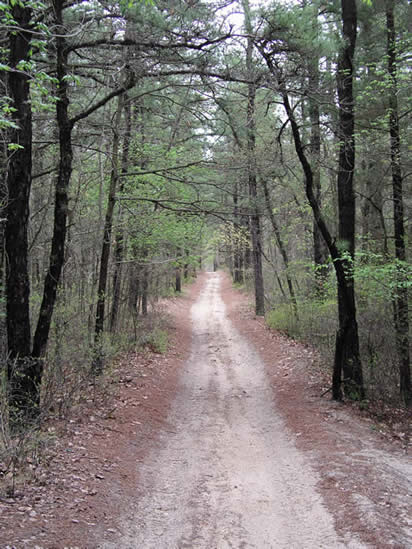
Since Wharton was purchased in the mid-1950s, motorized vehicles have been allowed to travel its network of sandy roads to tour the quiet of the forest’s interior, visit historic ghost towns and put in a canoe.
In recent years the damage to habitats and roads within the state forest has greatly accelerated as people in motorized vehicles have deliberately torn up fragile wetlands creating deep and dangerous puddles, destroying habitats, and making access for other users almost impossible.
The damage at Wharton State Forest has also hindered fire suppression efforts, and search and rescue, due to damaged roadways. Enforcement of illegal off-road activities has been extremely difficult without a map clearly designating roads where motorized vehicle use is permitted and delineating those areas that are strictly prohibited.
New Jersey Assuming Leadership on Clean Energy, Climate Change NJ has a goal to reach 100% clean energy by 2050!
New Jersey has made significant strides in addressing the monumental challenge of climate change and becoming a leader on clean, renewable energy.
In the first half of 2018, the state legislature passed — and Governor Phil Murphy signed — the landmark Clean Energy Act, placing New Jersey among leading states nationwide on renewable energy. The law requires that 50% of energy consumed in the state come from renewable sources by 2030, and sets ambitious targets for offshore wind, energy efficiency and storage. New Jersey Conservation Foundation played a key role in shaping the legislation with our partners and then worked to ensure it was implemented effectively, especially the new solar energy policies required. We also successfully advocated for provisions to ensure environmentally-sound siting of utility-scale solar projects in subsequent legislation.
Gov. Murphy also signed an executive order directing the New Jersey Board of Public Utilities (BPU) to create a new Energy Master Plan with a goal of 100% clean energy by 2050. New Jersey Conservation Foundation provided expert input to the BPU to help shape an effective plan that will transition our state away from polluting fossil fuels and toward clean, well-sited, renewable energy — which is the goal of the ReThink Energy NJ campaign that we lead.

Reaching our clean energy goals
Gov. Murphy has also jump-started New Jersey’s most promising, new clean energy industry — offshore wind —through multiple offshore wind solicitations that will bring clean energy, as well as new companies and jobs, to our state.
New Jersey Conservation Foundation is now leading efforts to pass legislation to codify Gov. Murphy’s executive order to achieve 100% clean electricity, and to tackle the second largest source of greenhouse gas emissions in New Jersey: reliance on natural gas and other fossil fuels to heat water and space in our homes and businesses.
To learn more, visit www.ReThinkEnergyNJ.org.
Get The Latest News
From The Garden State
In the
News